

Your shopping cart is currently empty.
CT/ST Interview Tips
Structure Of The CT / ST Interview
CT / ST interviews normally last 30 to 40 minutes and usually comprise three or four stations, each with a different theme. The exact duration, the number of stations and the themes will depend on each speciality, but stations tend to be 10-12-minute long. Note that, as always, there are exceptions as some candidates have had interviews that included one single 30-minute station (more or less alongside the format of the "old" SHO or SpR interviews).
The types of station vary from speciality to speciality, and in fact also from deanery to deanery. For example, some anaesthetics candidates in London have had almost exclusively clinical scenarios, whereas in Manchester the interviews were more balanced.
Globally speaking you are likely to have three or four stations taken from the following types:

Clinical station
This normally includes a range of clinical scenarios (e.g. emergencies) that you would normally be expected to handle. Some of the scenarios are straight forward, but others may be stretching you a little (i.e. you may not have met such situations in the past, but the interviewers would expect you to have a good educated guess).
Practical station
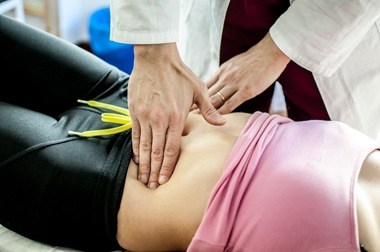
In some specialities, candidates may be asked to demonstrate practical procedures (e.g. intubating a dummy in anaesthesia, or suturing a tomato in ophthalmology). There is absolutely nothing that you can do to prepare for this station. Either you know or you don't. Practical stations tend to be reserved for surgery-related specialities.

General, Motivation & Teaching station
A number of deaneries and specialties have stations that are designated for generic questions. These tend to relate to your interest in the specialty and the deanery, together with your career plans and the manner in which you have developed your interest in the specialty. Usually the general station also deals with teaching skills.

Academic & Clinical Governance station
Most interviews will have an academic station. In some interviews, there can actually be two academic stations (e.g. one specifically on Research and Audit, and another one on other topics such as Teaching and Risk Management. Academic stations take the form of a traditional question and answer session. For example you may be asked to talk about your most interesting audit. The interviewers will then dig into the detail of your experience e.g. how you selected the standard, what you role was, what changed as a result, etc. Other questions will include your experience of Research, what you understand about research principles, questions on the importance of Research etc. Such questions can be daunting at first, but if you are well prepared, you can really shine.

Critical Appraisal station
In several specialities (e.g. ophthalmology, general surgery), candidates have been asked to critically appraise a paper, at all ST levels, including ST1. Preparation time varied between 20 and 40 minutes, followed by a 5 to 10 minute presentation. As part of a critical appraisal station, you are expected to demonstrate an understanding of how critical appraisals should be approached and you should also be able to answer any questions that the interviewers have on the paper that you have just read. This could include questions of a clinical nature, based on the topic being discussed; it also often includes questions on research principles such as "What is a p-value?" or "What are the ethical issues involved in this paper?". Experience of research is a definite advantage to succeed in this station. Having said that, attendance at journal clubs is also a good way of preparing yourself for it, particularly at the lower ST grades.

Role Play
In some specialities, role play has been introduced. Role play was already an integral part of SpR interviews for some specialities such as Obs & Gynae but it has been extended to other specialities in some of the deaneries, including psychiatry (e.g. dealing with a father who wants some news on his over-18 admitted daughter), ophthalmology (e.g. breaking bad news and counselling a patient with glaucoma) and several others.
In many ways, role-play stations are similar to those used for the recruitment of GP trainees. Their main aim is not to test your clinical skills & knowledge (this is achieved in others ways in proper clinical stations) but to test your approach towards patients and your communication skills. The clinical content of the role play section is therefore limited as they concentrate instead on your empathy, your listening skills, your ability to summarise information in a simple language, your ability to deal with anger and conflict calmly and sensibly, and your ability to build a rapport with a patient in sometimes difficult circumstances. The role play stations usually include actors who have been briefed accordingly. Having said that, the role is sometimes played by an interviewer. There have been occasions where role-play was introduced unexpectedly in a normal clinical station, or an ethics station. The station would start normally with a few general question such as "How would you deal with a patient who ...". Half-way through the station one of the interviewers will tell you that he is now the patient and that he wants you to act your answer out. This can be somewhat disconcerting and you should therefore be prepared for the worst, even if you have not explicitly been told that you will have a role play station.

Group discussion station
Group discussions' primary concern is to test your interaction with others and not so much your clinical knowledge, although an understanding of your speciality and its surrounding NHS context is obviously important. Interviewers/observers are testing the manner with which you influence other members of the group and how you actively engage in finding a solution to a given problem within the constraints imposed by the behaviours and personalities of the other members of the groups. Each group is made up of four to six candidates and the discussion topics range from the handling of a difficult case, to an ethical problem, to a current issue.
What Is A Structured Interview?
The phrase "structured interview" scares many candidates off but has in fact a simple non-scary meaning. They are opposed to "unstructured interviews".
Unstructured interviews are standard interviews where the interviewer may ask you various questions about yourself and your interests to assess whether or not you would fit into the post. There may be no specific order to the questions. An unstructured interview may seem like quite an informal chat. In unstructured interviews the decision to recruit is taken on a feeling that the interviewers have about you as opposed to a rigid marking system. Unstructured interviews still take place in some NHS trusts but mostly at Consultant level. In an age of equality, fairness and bureaucracy, most NHS Trusts have adopted the more complex but seemingly fairer and more open structured interview process.
Structured interviews are based around specific criteria that the interviewers are aiming to assess through your answers. Each interviewer will have a list of these criteria and questions will have been derived to ensure that all the criteria can be assessed through the interview. At the end of the interview each interviewer will hand in his scores and the candidates will be ranked. Higher ranked candidates are therefore more likely to get their preferred choice of post. This system has the advantage of being more transparent as it does not rely so much on "feeling" but it can also be quite rigid. In particular, the final decision relies heavily on your performance on the day of the interview, which, everyone knows, may not necessarily mean that the best doctor is being recruited.

Myths and facts about structured interviews
Myth
ST structured interviews are interviews where they ask for examples
Fact
Interviews where they only ask for examples are called "behavioural interviews". All the word "structured" means is that they are asking questions that are specifically designed to test specific skills and competencies
Myth
Everyone gets the same questions
Fact
Although it is correct that everyone gets the same opening questions for each skill, interviewers are allowed to deviate during probing and follow-up. The probing or follow-up questions will be based on your answer to the opening question. This allows the interviewers to prove appropriately into your background whilst ensuring that everyone has the chance to address the same topics in a similar manner
Myth
ST structured interviews are an objective way of recruiting candidates
Fact
Structured interviews introduce an element of fairness in the interview process because they remove part of the "He looks nice and friendly so I will give him a job" approach. They are designed to ensure that competencies are tested in a quasi-systematic manner. However they are not totally objective. For example, some of the criteria are still fairly vague (e.g. "the candidate handles conflicts tactfully"). Different interviewers may have a different idea of how tactul and/or pushy you should be. So, although it is fair to say that structured interviews are fairer than others in several ways, they are not totally objective. In addition, interviewers can always fiddle the marks to suit the candidates that they prefer...
Myth
Structured interviews are a new system introduced by MMC / MTAS
Fact
Structured interviews have been in place for a long time at SpR level in the NHS. In fact, in several specialties there have been OSCE structured interviews around for a long time (e.g. O&G). What has changed is the far more comprehensive marking schedule that was introduced by MTAS. But the principles, and the preparation required to be successful, remain the same as before
ST Interview Tips
TIP 1: HAVE AN EFFECTIVE PREPARATION PERIOD
Many candidates either under-prepare or over-prepare for their medical ST interviews. Most people also prepare in the wrong way.
Under-preparation: Being under-prepared is often the result of the misconception that, because interviewers can ask so many different questions, it is very difficult to prepare for anything. As a result, answers become disorganised, contradictory and lengthy, the candidate loses his/her way in unnecessary details and misses out crucial opportunities to put across his/her skills in a positive light. Other candidates also wake up too late or leave it until they get short-listed to start thinking about their interview. In many cases, it is too late.
Over-preparation: Over-preparation often combines with poor strategy and results in candidates rehearsing answers until they are perfect. People who make this mistake are easily thrown off balance by questions they have not prepared; the answers they give sometimes also do not quite match the question asked. Generally, they come across as bad listeners and are unable to deviate from their prepared answers.
Wrong preparation: Many candidates believe that preparing for an interview consists principally in taking a list of hundreds of questions and testing their ability to come up with "something" quickly. Rehearsing answers to many questions is the final step of the process, where you pull together all the elements that you have gained during your preparation. Think about it: the first day you learnt to take blood, you didn't do it 100 times in 10 minutes... Similarly, don't try to answer 100 questions in 10 minutes as it will only result in making you sound vague on the day.
What is the right preparation for a medical interview?
While headline specialty training competition ratios highlight overall applicant numbers, your portfolio score and interview preparation remain the main predictors of success.
Spend time on your CV: First you should spend some time looking at your experience and your CV. The best candidates are those who are able to provide personal answers. This is only possible if you know what you have achieved. Aside from that, it is embarrassing to be asked a question on your CV and not be able to answer it.
Spend the time to know yourself: Many questions relate to your ability to exercise one skill or another. Some of these questions are so common that there is no excuse for you not to have an answer. Interviewers can sometimes be unforgiving. Many candidates would not be able to answer personal questions if they were being questioned by their own friends in a relaxed environment. If you cannot explain what makes you a good communicator in your living room, in 5 minutes, when your best friend asks you about it, you cannot expect to be able to answer that question under pressure, in 2 minutes, with several people staring at you. Think about what you are good at and what makes you good at it; think about examples of situation where these strengths have had a strong impact, etc. The more thinking you do beforehand, the less thinking you will need to do on the day.
Spend time looking at key questions: There is little value in looking at hundreds of questions too early. You will only perpetuate your mistakes and will not teach yourself to think about the question and its different angles. Instead, if you have time, try to pick one theme per day (research, teaching, confidentiality, etc) and look at different questions that relate to that theme. You will learn to look at the same information in different ways and you will teach your brain to make the connections that will enable you to think laterally at an interview. You should spend at least 5 minutes on each question, taking the time to derive good content and to organise your thoughts. Our courses are specifically designed to help you in this process by giving you the tools and the direction you need, which makes you save time in your preparation. Our experience shows that, on average, successful candidates spend 15 to 20 hours preparing for their interview.
Practice: Only once you have done this preparation should you practice your answers someone else, or by talking to your mirror/walls. Doing it too early will only serve in either giving you a false sense of security or in making you panic depending on how confident you are.
TIP 2: Do not assume that standard answers WILL make you SUCCEED
Many candidates believe that by regurgitating a ready-made answer, they will get the job. This is a myth. You should not believe anyone (including some senior doctors) who tell you that you will get the job by learning a standard answer. What will really make the difference is the personal style that you adopt in formulating them and how you back up your claims with relevant and well developed examples. This is also what makes our coaching so successful and so different. We work with you to extract the right information at the right level of personalisation. Your answer must be UNIQUE, not the same as hundreds of others.

TIP 3: DO NOT TRY TO BE DIFFERENT BY LOOKING FOR UNUSUAL ANSWERS
Many candidates believe that they need to be different to stand out. This makes them scared of addressing some questions and they live in fear of sounding boring. As a result they try to be clever and to find "unusual answers". This is a dangerous game. What makes you stand out is not the fact that the content of your answer is wildly different to your competitors' answers, but the manner in which you express and back up good ideas, and the confidence that you have in your delivery and in your opinions. ST interviews (whether you are applying for ST1, ST2, ST3 or ST4) are not about being original; they are about being all-rounded.

TIP 4: ORGANISE YOUR ANSWERS
Many candidates' answers are made up of a long list of ideas, most of which are irrelevant or not backed up. There is no point putting across 20 ideas if the average human being can only remember 3 or 4 ideas at a time. You will just drown your interviewers in a mass of information they can't digest. As a result they will either lose interest and start looking through the window, or they will get a headache trying to make sense of it all. Put yourself in their shoes! They have been sitting there listening to the same old answers from everyone. Make their job easy, don't make them think too much, organise the information for them. In our experience, those who get the jobs are not those who have an absolutely flawless content in their answers. They are those who have a good structure and make them personal, even if they only have 70% of the expected content.

TIP 5: BE PERSONAL IN YOUR APPROACH
For each question, there are a number of points that can be raised. Most people who have prepared will automatically come up with these points and, in order to make a difference, you will need to personalise your answers otherwise you will sound the same as everyone else. Depending on the question that you have been asked, this can be achieved in different ways.
- If the question is about your interpersonal skills, try to bring in a few examples that demonstrate your experience. For example when discussing team playing, describe situations where you gained experience of team work. You should not go into too much detail but be specific enough to be credible.
- Steer clear of definitions and grand statements. An interview is a conversation, not a speech or a verbal essay. You need to appear natural and confident in what you say. Do not be scared of expressing your ideas in your own words. For example, when is the last time you used the word "flourish" at home or at work? So why insist in using it in your description of Clinical Governance? Too many people try to explain simple ideas using pompous words because they feel it makes them sound better. In reality it makes them sound vague, theoretical and, sometimes, confused ... the interviewers are confused too.
- Don't be afraid of expressing how you feel, what you liked, why you enjoyed it, etc. They want to recruit human beings, not clones. Also, talking about feelings helps being out your enthusiasm and passion for what you do. No one has ever sounded passionate talking about.

TIP 6: STOP OBSESSING ABOUT YOUR BODY LANGUAGE
There is little point in worrying about how you cross you fingers or your legs if what comes out of your mouth makes no sense. Body language is not part of the marking sheet interviewers have. In fact most people will ignore your body language unless it is really bad, in which case it most probably means that you have very little confidence and therefore that your answers are also very bad.
Most people have a normal body language and interviewers will make allowances for the fact that you are a bit nervous. If you spend the time preparing well for your interview, you will gain much more confidence in yourself and your body language will follow naturally. The more you think about your body, the less you are able to think about your answers.

TIP 7: DO NOT SPEND MONTHS LEARNING THE MINUTE DETAIL OF EACH POSSIBLE NHS ISSUE
There is always a danger in knowing too much about one subject: they can ask you for more detail until you fall on your own sword. At our last count, there were over 95 possible NHS issues you could be asked at an interview. Even if you spend just 20 minutes on each, it would still take you over 30 hours of work. And that's just for the basics.
Instead concentrate and spend some proper time on 5 or 6 key issues of importance either because they are of actuality or because they are of close concern to your specialty. But do not confine yourself to learning the basic facts otherwise you will go back to the realm of ready-made answers. At ST interviews, you will be expected to show an understanding of the issue but also of it consequences and practical applications. So spend your time wisely by discussing the issues with colleagues and debating them. You will then start thinking about those issues in different ways and will gain a personal understanding of them that will enable you to discuss them freely at a medical interview.
One feature of our courses is the fact that we spend over an hour and a half debating those issues as a group, which can help you save time in your preparation.